IBM Lost $30 Billion in a Day - Because of AI
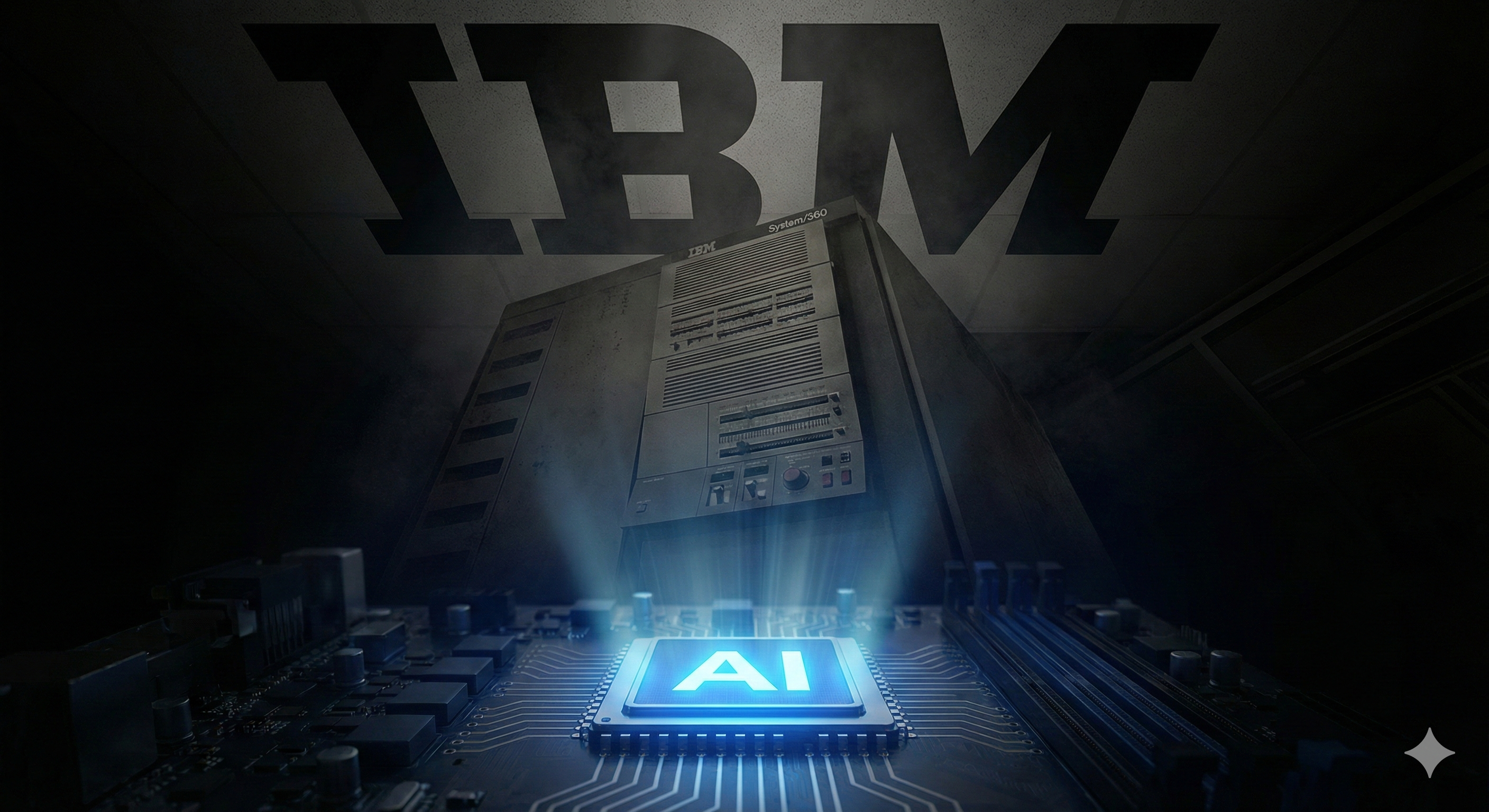
Did not expect this one. IBM shares cratered 13% today - worst single-day loss since 2000. What happened? An AI company called Anthropic showed that their tool can now do something that used to take armies of expensive consultants: modernize the ancient software that runs banks, airlines, and government systems. $30 billion in market value, just gone.
What's the Big Deal?
Here's something most people don't realize: a programming language from the 1960s called COBOL still runs the systems behind 95% of U.S. ATM transactions. It powers airline reservation systems, government agencies, and major financial institutions. Hundreds of billions of lines of this code are still in production.
The problem? Most of the people who wrote it are retired or retiring. Finding someone who can read and maintain this code is getting harder every year. So companies pay massive consulting fees - we're talking millions per project - to slowly translate these old systems into modern languages.
That's where AI just changed the equation.
What Actually Changed
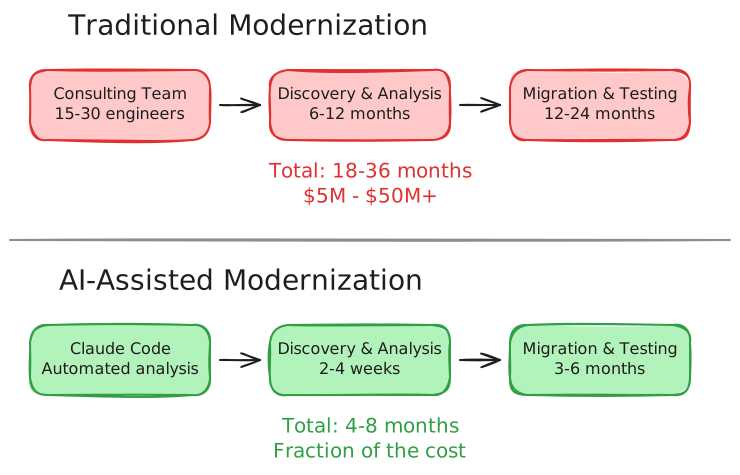
It's not that AI suddenly "learned" this old programming language. AI has been able to read and write it for a while. What changed is the full pipeline. Anthropic showed their AI tool can now handle the entire modernization process at scale - tracing how the code works, mapping how different parts connect across hundreds of files, translating the logic into modern languages, and building the scaffolding to run old and new systems side by side.
The kind of work that used to take consulting teams 18-36 months? Now it takes 4-8 months.
Why the Stock Market Panicked
Follow the money:
- IBM's consulting arm pulls in over $5 billion per quarter. $10.5 billion of their $12.5 billion in AI-related bookings? Consulting.
- The market for modernizing old systems is projected to hit $13.34 billion by 2030. IBM, Accenture, and Cognizant own most of it.
- If AI compresses that work from months to weeks, that entire market shrinks fast.
Here's what's interesting though - IBM's most recent earnings actually beat expectations ($19.69B revenue). The stock didn't drop because of today's performance. It dropped because the market is pricing in what happens 2-3 years from now. Wall Street is betting that AI will eat into IBM's most profitable business.
My Take
I think the 13% drop is an overreaction. But the direction? That's right.
The consulting squeeze is real. If AI handles 60% of the analysis and discovery work, projects get shorter and cheaper. That's just math.
But here's what I think people miss - modernizing old systems was never really about reading code. The hard part has always been figuring out what the business actually does. Undocumented rules, edge cases from some 1987 regulation, processes that only matter on the third Tuesday of each quarter. AI can map how code connects all day long. But sitting down with a banking operations manager and extracting 30 years of institutional knowledge? That's still a human problem. I think people seriously underestimate how much of this work is archeology, not engineering.

"AI replaces consulting" is too simple a story. These projects don't fail because the code is hard to read. They fail because of politics, risk management, and regulatory compliance - the organizational stuff. AI doesn't help with any of that.
What would actually keep me up at night if I were IBM isn't this specific announcement. It's AI reducing the labor intensity of software work across the board. Every company that sells engineering hours is exposed to that trend.
What This Means for People's Careers
If AI is compressing the value of routine technical work, the move is pretty clear: focus on what AI can't do.
- Use AI, don't compete with it. It's not replacing you - it's replacing the version of you that refuses to use it. The people who thrive will be the ones who learn to work alongside these tools.
- Understand the business, not just the tools. The person who knows why a process runs on the third Tuesday is worth more than the person who can read the code that implements it. Domain knowledge is becoming more valuable, not less.
- Work on the messy, human problems. Cross-team coordination, compliance, vendor relationships. These are hard because they're people problems, not technical problems. AI doesn't help with people problems.
- Build judgment, not just skills. AI can suggest ten options. It can't own the decision or be accountable for the outcome.
Not a reason to panic. Just a signal to invest in the stuff that sits above the technical work.
Key Takeaways
- IBM dropped 13% (worst day since 2000) after AI showed it can automate the modernization of 60-year-old banking software
- The breakthrough isn't AI reading old code - it's handling the full modernization process cheaply and at scale
- AI compresses the labor side of these projects, but institutional knowledge and organizational change management are still fundamentally human work
- For career planning: focus on business understanding, judgment, and the messy human problems that AI can't touch
Dig Deeper
- CNBC: IBM is the latest AI casualty - stock drop and market reaction
- Benzinga: IBM Stock Cratering 13% - business impact and analyst reactions
- MarketsandMarkets: Mainframe Modernization Market - $13B market sizing
- The Register: IBM z17 Sales Surge - IBM Q4 2025 earnings before the drop
- IBM Q4 2025 Earnings Release - the earnings Wall Street ignored